
World War Armies: RTS Game
Hypemasters, Inc.Strategy
4.32.37K Reviews
- Version
- 1.53.0
- Installs
- 5.00M
- Age Rating
- Everyone 10+
Screenshots
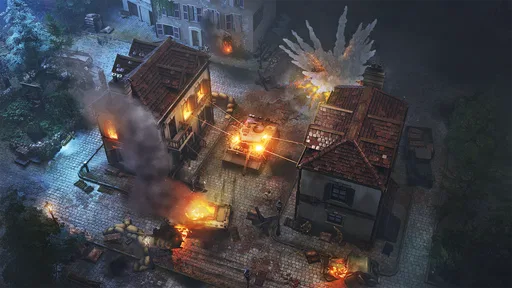
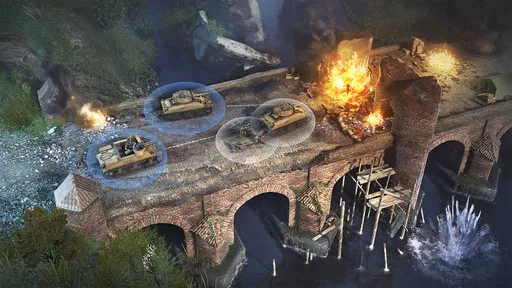
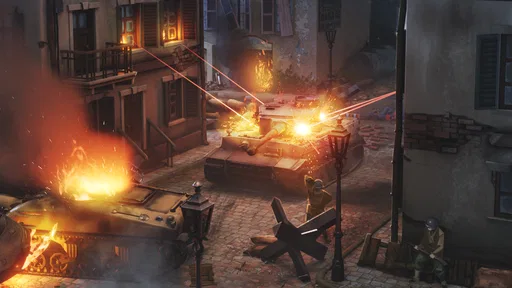
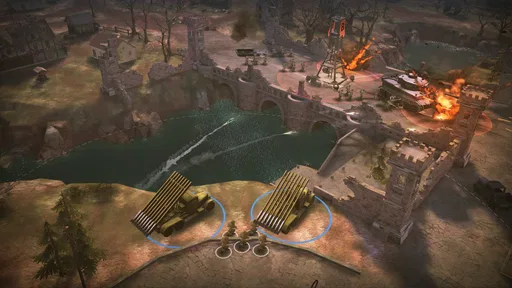
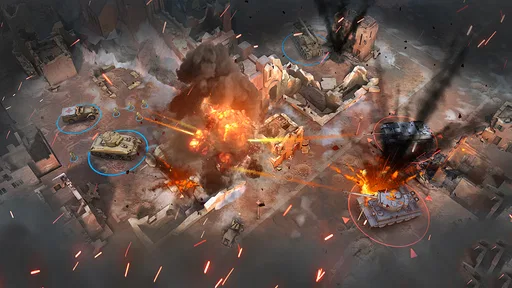
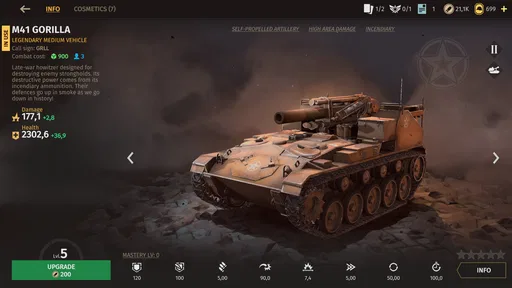
Our Review of World War Armies: RTS Game
 Analysis by Appyee
I spent time with World War Armies: RTS Game as the kind of strategy title that can easily become a shared-device choice. It is free to start, built around real-time military battles set during World War II, and published by Hypemasters, Inc. The important distinction is that this is not a slow board-game-style experience where everyone can pause and debate every move. Events unfold while I am playing, so even a short session asks me to pay attention, make decisions quickly, and accept that a poor opening can affect the rest of the battle.
That makes it interesting for a household with different gaming habits. One person might enjoy planning attacks and learning unit roles, while another may prefer the immediate pressure of controlling an army. At the same time, a shared tablet or phone needs some practical boundaries. This is a game I would hand to a teenager who likes competitive strategy, but I would not treat the age label of Everyone 10+ as a guarantee that every child will find the pace or military theme comfortable. My overall impression is positive, with a clear warning: it rewards focused play much more than casual tapping.
How it works when a household shares one device
A realistic use case is a family tablet used after school or in the evening. I can imagine one player completing a battle, handing over the device, and another person trying a different approach. That arrangement works best when each player agrees to stop at a natural point rather than interrupting an active match. Real-time strategy does not lend itself well to someone suddenly taking the device during a tense attack, because the player needs to remember what is happening and react without a long pause.
The game’s World War II setting also gives the shared experience a particular tone. It is not a colorful puzzle that feels neutral for every age group. Military units, battlefield objectives, and the language of command create a more serious atmosphere, even though the game is presented as entertainment. I would explain that context before letting a younger family member play, especially if they are sensitive to war themes. The age guidance places it at Everyone 10+, which feels like a useful starting point for a household conversation rather than a substitute for parental judgment.
For a shared device, I would establish a simple routine: finish a match, note whose turn it is to play next, and avoid changing settings or spending anything without asking. That sounds obvious, but free-to-play games can make a device feel like a communal space while progress, purchases, and preferences may belong to the person currently holding it. I found that the best household experience comes from treating the game as an individual activity that happens on a shared screen, not as one blended profile where everyone makes decisions for everyone else.
There is also a time-management issue. A quick look at the game can turn into a longer session because a player wants to recover from a defeat or test a new plan immediately. I would use it as a planned break rather than an always-available background activity. That is particularly important when the device is also needed for schoolwork, messages, or other games. The title is most enjoyable when the player can give it uninterrupted attention, not when it is squeezed between several other tasks.
Separate habits matter more than a shared screen
Before installing it on a family device, I would decide who is responsible for the game and who is merely trying it. That distinction helps avoid arguments over progress and makes it easier to keep play styles separate. If several people use the same device, each person should know whether they are continuing an existing session or beginning from the available starting point. I would also make sure younger players understand that a free download can still contain optional purchases, with individual items ranging from $0.49 to $149.99.
That price range is the biggest practical reason I would not leave a child alone with the game on a shared device without discussing purchases first. I am not saying that spending is required to enjoy the title; the game is free to download. My point is that the household should agree on its own rule before anyone reaches a purchase screen. A simple “ask first” policy is more useful than assuming every player will interpret optional spending in the same way.
For adults sharing a phone, the issue is less about supervision and more about preserving concentration. A player who is learning the game may need several attempts to understand how to use an army effectively. Another person taking over immediately can make that learning feel fragmented. I would recommend giving the new player a short uninterrupted block to experiment, then discussing what happened afterward. That turns the shared device into a place for comparing tactics instead of a source of constant interruptions.
Learning the battlefield without losing control
The core appeal is the pressure of real-time strategy. I am not simply selecting a mission and waiting for results. I have to watch the battlefield, decide where to commit forces, and react when the situation changes. That produces more tension than many turn-based strategy games, where I can analyze every option at leisure. It also creates a steeper first impression: a mistake can feel immediate, and I may understand why I lost only after replaying the situation in my head.
My most useful early habit was to resist the urge to send everything forward at once. In a real-time match, the first visible opportunity can be a trap if it pulls the army away from a safer position or leaves another area unattended. I found it more productive to observe the opening, identify the immediate pressure point, and then commit resources with a reason. This is a small change in mindset, but it separates deliberate play from frantic tapping.
Another practical lesson is to treat every battle as information, even when the outcome is disappointing. Instead of asking only whether I won, I look at when the match began to slip. Did I react too slowly? Did I attack without enough support? Did I focus on one area while ignoring the wider battlefield? Keeping one short note after a loss gives the next attempt a purpose. That workflow is more valuable here than repeatedly pressing rematch and hoping instinct will improve on its own.
Players who enjoy competitive strategy will probably appreciate this learning curve. Those who want a relaxing military-themed game may find the same qualities tiring. The game asks me to stay mentally present, and the real-time format can make a short failure feel more frustrating than a long turn-based loss. I would choose a slower alternative for a child who is still learning strategy games, for someone who dislikes pressure, or for anyone who wants to play while distracted by conversation.
Three habits that make early sessions better
- Watch before committing. I try to read the opening situation rather than immediately moving every available force. This reduces the chance of turning a small opportunity into an exposed attack.
- Review the turning point. After a defeat, I identify the first decision that created trouble. That is more useful than changing everything at once, because it gives the next match a specific experiment.
- Explain the plan when handing over the device. In a shared household, a quick summary of what I was attempting prevents the next player from mistaking an unfinished setup for a completed strategy.
These habits also help with coordination between players. If two people are taking turns, they can compare decisions without pretending that one approach is universally correct. One player may prefer cautious positioning, while another may test faster pressure. The game becomes a small strategy conversation, but only if each person explains the reason behind a move instead of simply claiming that the other person played badly.
I would not describe the experience as a replacement for a full desktop real-time strategy game. A computer with a larger display and traditional controls is usually better for someone who wants extensive management, long sessions, or a more spacious view of a battlefield. On a phone or tablet, the appeal is convenience and direct engagement. I can start a battle without setting up a desk, but the smaller screen also makes precision and awareness more demanding. That trade-off is central to deciding whether this version suits you.
Account boundaries and shared-device expectations
Household coordination should begin before the first match. I would decide whether the device belongs to one primary player or whether everyone is simply trying the game. If only one person is invested, that player should be the one who changes the way the game is approached and who keeps track of progress. If several people want to play, I would avoid making promises about shared advancement unless the game’s available account behavior has been checked directly on the device.
The safest approach is to keep expectations modest: treat each person’s session as their own experience, do not assume that another player’s progress represents yours, and do not make purchases for someone else. This is not an accusation against the game; it is normal shared-device discipline. A family can enjoy the same title without treating one installation as a perfectly separated collection of personal spaces.
I also recommend agreeing on notification and sound habits. A strategy match can be distracting when alerts or audio interrupt homework, meals, or another person’s quiet time. I would keep the game in the appropriate place in the household routine instead of allowing it to become the default activity whenever the device is free. That matters more with a real-time title because interruptions affect performance and can make the player blame the game for a problem caused by the environment.
For a parent or guardian, the purchase range deserves a direct conversation. I would explain that the game costs nothing to download but includes optional in-app purchases. A child should know that tapping a button can have real financial consequences, and an adult should decide what approval process the family uses. Since the available item prices extend from a small amount to a much larger one, “it is only a cheap game” is not a safe assumption for a shared device.
There is a useful distinction between access and trust. Giving a teenager access to a strategy game does not mean giving them permission to spend, alter another person’s progress, or play at any hour. I would set those expectations in plain language. The game itself can then stay focused on what it does best: asking the player to make battlefield decisions, not forcing the household to negotiate basic device rules during a match.
Who will enjoy it, and who should choose something else?
World War Armies: RTS Game is a strong match for players who like military settings, quick decisions, and the satisfaction of improving through repeated attempts. It suits someone who enjoys asking why a battle went wrong and then testing a different opening. The free entry also makes it easy to try without committing to an upfront purchase, while the current version, 1.53.0, gives prospective players a clear reference point when checking compatibility or discussing the game with others.
Its audience is broader than dedicated strategy veterans, but I would not call it universally accessible. A newcomer can understand the basic fantasy of commanding an army, yet the real-time format may still feel demanding. Players who prefer turn-based planning, narrative adventures, peaceful simulation, or short puzzle rounds should look elsewhere. The military theme may also be a poor fit for people who want a lighter atmosphere, regardless of how much they enjoy strategy mechanics.
Compared with a traditional turn-based strategy game, this title gives me less time to calculate and more reason to trust a prepared plan. Compared with a large desktop RTS, it is easier to pick up on a mobile device but offers a more constrained playing environment. Compared with a casual tactics game, it places more emphasis on ongoing battlefield awareness. Those comparisons explain its position clearly: it is for the player who wants real-time pressure in a portable format, not for someone seeking maximum control or complete relaxation.
The developer, Hypemasters, Inc., has positioned the game in a competitive strategy space that has already attracted a sizeable audience. It has passed five million installs and holds a 4.3 average from roughly ninety-eight thousand ratings, with about two thousand four hundred written reviews. I read those figures as evidence that the concept has reached well beyond a tiny niche, but popularity does not remove the need to test the pacing personally. A high number of installations cannot tell me whether I will enjoy the pressure of a particular match.
Compatibility is another practical point. The game supports Android seven point zero and later, so owners of older compatible devices may be able to try it without upgrading immediately. Still, real-time strategy is sensitive to responsiveness and screen comfort. Even when a device meets the minimum operating-system requirement, I would judge the experience by how easily I can see the battlefield and issue commands. A household tablet may be more comfortable for shared play than a small phone, while a newer phone may be preferable for someone who values portability.
Age, trust, and the tone of play
The Everyone 10+ rating fits my view that this is better introduced with context than handed over without explanation. The game’s historical military setting can prompt useful conversations about the difference between a strategy scenario and real-world history, but families should still decide whether that theme is appropriate for the individual child. Some ten-year-olds may be comfortable with it; others may not be, and an older player may still dislike the subject matter.
I would watch how a younger player responds to losing. Real-time pressure can encourage rapid retries, frustration, or an urge to spend in order to change the experience. A short conversation after the first few matches can reveal more than the age label alone. If the child can stop after a loss, understand that improvement takes practice, and ask before spending, the game may work well as a guided strategy activity. If every defeat leads to anger or repeated purchase requests, I would choose a calmer alternative.
For adults, the trust question is simpler but still relevant. A shared device can blur who is playing and who is responsible for a purchase or a changed setting. I would keep the game associated with the person who actually wants it, and I would avoid letting a guest explore unsupervised if the device is connected to a payment method. That is sensible household behavior for any free-to-play title, particularly one with such a wide range of optional item prices.
My household verdict
After using it as both a personal strategy game and a possible shared-device activity, I think World War Armies works best in a household that values clear boundaries and focused sessions. The game offers a compelling reason to return: each battle gives me another chance to improve my opening, read the pressure on the battlefield, and make more deliberate decisions. It is portable, free to begin, and sufficiently demanding to keep a strategy fan engaged beyond a single trial.
My reservations are equally practical. The real-time structure is not ideal for interruptions, the military theme will not suit everyone, and optional purchases require an explicit household rule. A shared screen does not automatically create a shared experience; players need to respect turns, protect each other’s progress, and avoid confusing access with permission. Families looking for a cooperative, low-pressure game may be happier with a different category altogether.
For a teenager or adult who enjoys competitive military strategy, I would recommend trying it. For a younger player, I would introduce it alongside a conversation about the setting, stopping after a few sessions to see whether the pace feels enjoyable rather than stressful. And for anyone installing it on a communal device, I would settle the account and spending expectations first. With those conditions in place, this is a worthwhile portable RTS rather than merely another free download.
Verdict
Strengths of World War Armies: RTS Game
- Quick matches make it easy to play during short breaks.
- Distinct factions offer varied strategies and replay value.
- Unit controls feel responsive on touchscreen devices.
- Upgrades and research add meaningful progression over time.
- Regular events can provide extra goals beyond standard battles.
Limitations of World War Armies: RTS Game
- Some upgrades and units may take considerable time to unlock.
- Matchmaking can occasionally pair new players with stronger opponents.
- The interface may feel crowded on smaller phone screens.
- Online play requires a stable connection for a smooth experience.
- Free players may encounter pressure to spend on faster progression.
Similar Picks in This Category
View All
Clash of Clans
Supercell4.5

Plants vs. Zombies™
ELECTRONIC ARTS3.7

Lords Mobile: Kingdom Wars
IGG.COM4.5

Clash Royale
Supercell4.4

State.io — Conquer the World
CASUAL AZUR GAMES4.1

Car Driving School : Car Games
Spark Game Studios3.9
Frequently Asked Questions
What is World War Armies: RTS Game?
World War Armies: RTS Game is a real-time strategy title focused on World War II-inspired battles. You command military units, capture strategic points, manage resources, and fight opposing armies in fast-paced matches. The game combines base management, unit deployment, tactical positioning, and progression systems, making it suitable for players who enjoy competitive strategy rather than simple tap-to-win gameplay.
Can I play World War Armies: RTS Game offline?
The game is primarily designed around online gameplay, especially its competitive multiplayer battles and account-based progression. An internet connection is generally required to access the main features, synchronize progress, and participate in matches. Players should not expect a complete offline campaign experience, so a stable connection is recommended before downloading if multiplayer strategy is the main reason for installing it.
Is World War Armies: RTS Game free to download and play?
World War Armies: RTS Game can generally be downloaded for free, but it may include optional in-app purchases. These purchases can provide resources, cosmetic items, progression advantages, or other conveniences, depending on the current version. You can play without paying, although advancing or collecting certain content may take more time if you choose not to spend money.
Does the game support multiplayer battles?
Yes, multiplayer combat is one of the central features of World War Armies: RTS Game. You build an army, select suitable units, capture objectives, and react to your opponent’s strategy during live battles. Success depends on timing, map awareness, unit combinations, and resource management. Because matches are competitive, beginners may need several games to understand the pace and balance.
What devices are needed to run World War Armies: RTS Game smoothly?
The game is available for supported Android and iOS devices, but performance can vary depending on hardware, operating-system version, available storage, and graphics settings. A relatively modern phone or tablet is recommended for smoother battles and shorter loading times. Before installing, check the official store listing for the latest requirements and make sure you have enough free space for updates and additional game data.
Play our best games!


